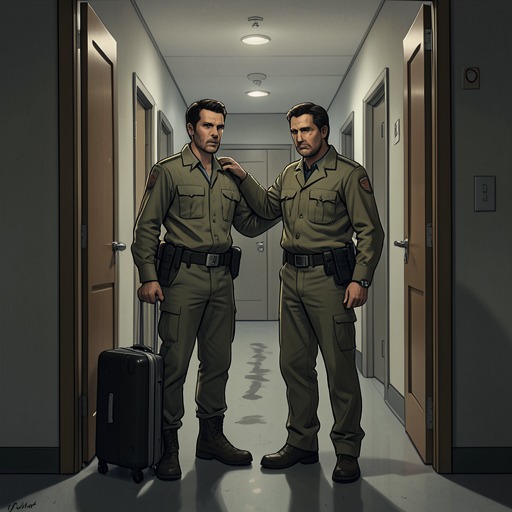
New Year’s Eve conflict and reconciliation
After We CollidedNew Year’s Eve conflict and reconciliation is a turning point in Tessa and Hardin’s relationship: Tessa’s kiss with another man provokes Hardin’s jealousy and a night of heavy drinking, but their next-day conversation brings them back together. The reconciliation rests not on the disappearance of anger or mistrust, but on an uneasy exchange of admissions, apologies, and promises. Their renewed intimacy closes the immediate rupture while leaving the couple’s deeper pattern of conflict and repair intact.
Causes and Stakes
The immediate crisis begins with Tessa kissing another man. Hardin later describes the kiss as a moment when he felt he had lost her, even though she insists that she did not leave him and calls the kiss a mistake. His response makes clear how quickly jealousy becomes a threat to the relationship: he says that the possibility of acting violently against Zed had occurred to him, and admits that the thought remained after the night had passed. Tessa is relieved that he did not attack Zed, but she also asks him not to drink again, telling him that alcohol changes how he behaves.
The incident is not simply a dispute over Tessa’s actions. Hardin says he drank because he was angry and hurt, and because the image of her kissing someone else kept returning to him. He had intended not to drink so much, but continued drinking as those thoughts persisted. He recognizes that Tessa had been afraid of him. That recognition shifts the argument beyond jealousy: his reaction has made her feel unsafe, and the couple must address the consequences of his conduct as well as the hurt he attributes to her.
The Next-Day Confrontation
Their conversation moves between attempted reconciliation and renewed conflict. Hardin says he does not want to become like his father, and acknowledges that he should not have drunk so heavily. Yet he also insists that Tessa was wrong. His response therefore does not begin as an uncomplicated acceptance of responsibility: he pairs his regret with a claim against her, while his anger remains close to the surface.
Tessa answers by naming the effect of his drinking and his temper. Hardin, in turn, admits that he has repeatedly treated her badly and that she has forgiven him for more than she has done to him. He argues that it would be unfair to demand forgiveness from her while refusing to offer it himself. He apologizes for the previous night and calls his own behavior foolish. The admission matters because he frames forgiveness as something that must be reciprocal, rather than as a privilege he can expect from Tessa while withholding it from her.
Tessa accepts some responsibility too. She recognizes that she knows how he feels about her being with other men, and says she should not have used that knowledge against him in anger. She promises to try to think before acting. Their apologies are therefore not identical: Hardin’s addresses his drinking, anger, and wider history of hurting her; Tessa’s addresses the way she acted in this particular conflict. The exchange offers a temporary balance of accountability without erasing the unequal weight of their past behavior.
Reconciliation and Its Limits
When Tessa asks whether they are all right, Hardin does not claim sole authority to decide. He tells her that the answer is not only up to him. Tessa then says that she wants them to remain together. This moment makes reconciliation a choice voiced by both of them, even as Hardin’s earlier outburst shows how unstable their negotiations can be. His mood shifts quickly, and his calmer manner does not mean that the anger has vanished.
The couple’s physical closeness follows the verbal exchange. Hardin tells Tessa that he was afraid she would not be there when he returned home; she answers that she is not going anywhere, though she privately hopes that her reassurance will prove true. He kisses her rather than continuing the conversation. The kiss seals their immediate return to intimacy, but the hesitation in Tessa’s reassurance preserves the uncertainty beneath it. Their reunion is real, yet it does not settle whether promises made in the heat of reconciliation will change what happens in the next conflict.
A Recurring Pattern of Communication
Other conversations in the relationship help clarify what this reconciliation does not resolve. In a separate discussion about whether they can move past Hardin’s betrayal, Tessa asks him to explain how he feels, while he points out that she has not explained her own feelings either. She realizes that confusion has kept her from communicating clearly. The exchange gives shape to a recurring difficulty: one partner asks for openness, the other experiences silence or mixed signals, and both interpret the other’s behavior through accumulated hurt.
In another later conversation, Tessa describes feeling secondary to Hardin’s friends, parties, and plans for the future. She says she has not been included in decisions about her own life and that her need for security has been mistaken for pressure to marry immediately. She also recalls his having stayed out while drunk with another woman. These grievances are distinct from the New Year’s Eve kiss and drinking, but they expose the broader stakes of the couple’s repeated reconciliations: an apology for one night cannot by itself answer her concern that her wishes and future do not receive equal consideration.
A later birthday misunderstanding shows the same communication problem from another angle. Hardin asks Tessa to listen, explains that he did not know she had made a cake or was waiting for him, and says he did not knowingly stand her up. He kneels in front of her and asks where they go from there, saying that their repeated movement between conflict and distance is wearing him down. The scene is separate from the New Year’s Eve dispute, but echoes its reliance on a conversation that only begins after anger, silence, and misunderstanding have already accumulated.
Consequences and Significance
The episode’s resolution is therefore both meaningful and limited. Hardin acknowledges that his drinking frightened Tessa and that his past wrongdoing gives him reason to extend the forgiveness he has often received. Tessa admits that she acted in anger and says she wants to stay with him. Their kiss restores closeness, but the continuing importance of communication, trust, and mutual consideration remains visible in later disputes.
The story also places private reconciliation beside consequences that cannot be repaired simply by a partner’s forgiveness. Hardin’s account of Natalie’s past explains the scale of harm he has caused beyond this relationship: after James shared a video of her, it spread rapidly, her family expelled her, and she lost a university scholarship. That history is not part of the New Year’s Eve incident, but it gives weight to Hardin’s acknowledgment that he has done far worse than Tessa. Likewise, when Tessa later asks Zed not to press charges after Hardin attacks him, Zed agrees while reminding her that she is once again cleaning up after Hardin. These separate events underline the limits of the couple’s private cycle of apology and forgiveness. The New Year’s reconciliation restores the relationship for the moment; it does not undo harm to other people or guarantee that the same pattern will not return.